Running Gait Analysis Near Me: Why You Don't Need to Visit a Lab in 2026
A guide on why expensive lab running gait analysis is obsolete in 2026, and how to get professional biomechanical feedback at home with AI.

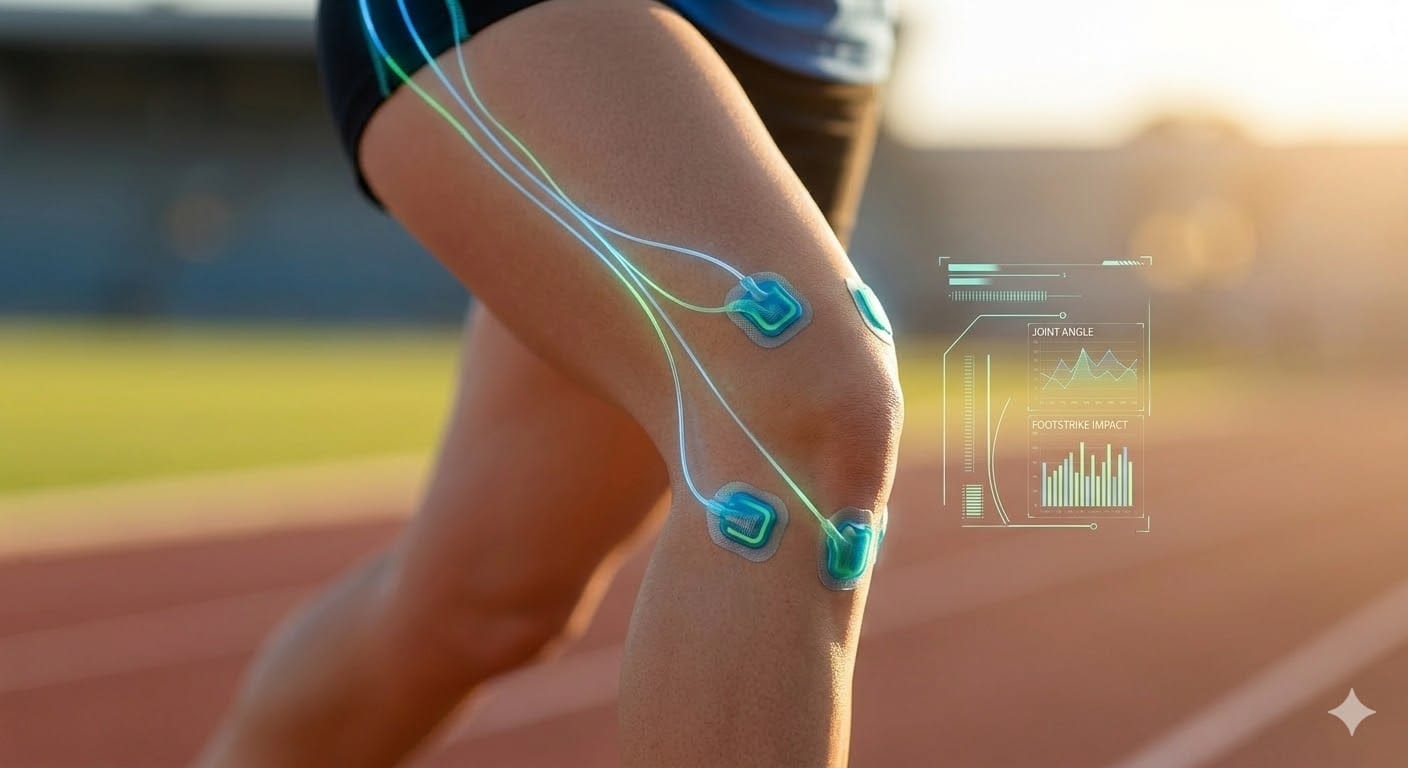
If your IT band has been flaring up, shin splints keep coming back, or your knee aches after every long run, you've probably typed "running gait analysis near me" into Google. It's not just a common frustration — these are biomechanical warning signs that are entirely fixable, and in 2026 you do not need to leave your neighbourhood — or pay $150–$300 at a local clinic — to address them.
You likely found a list of local physical therapy clinics, sports medicine labs, or specialty running shoe stores. And if you clicked through, you probably saw prices ranging from $150 to $300 for a single session, usually involving a treadmill, sticky reflective markers, and a lot of waiting. I was ready to accept that maybe I just wasn't built for marathon distance — until I stopped looking for a local lab and looked at my phone instead.
For elite marathoners, a lab visit might be worth it. But for the vast majority of recreational runners? You no longer need to visit a lab to get professional-grade biomechanical feedback on your running gait. In 2026, the technology required to analyze your running stride has moved out of the clinic and into the smartphone in your pocket.
What Does a Lab Running Gait Analysis Actually Measure?
Traditional gait analysis looks for mechanical inefficiencies that cause injuries. Whether you are at a high-end lab or a local shoe store, the core objective is to measure four key metrics:
- Cadence: How many steps you take per minute — the single best predictor of overstriding.
- Strike Pattern: Where your foot lands relative to your center of mass.
- Pelvic / Hip Drop: Whether your hips stay level or collapse under your body weight on each stride.
- Forward Lean: How efficiently you use gravity to drive your propulsion.
The numbers behind these metrics matter enormously. Running with a cadence below 158 steps per minute is a strong predictor of overstriding. The research-backed optimal target range is 168 to 180 steps per minute. If your cadence sits at 158 or lower, you're almost certainly landing your foot too far ahead of your hips on every stride — that's overstriding, and it's the root cause of shin splints in the majority of recreational runners.
Overstriding by 14cm or more beyond your optimal contact point dramatically increases the braking force your body absorbs with each footstrike. An 8° reduction in pelvic drop, combined with glute and hip strengthening, can eliminate those lateral forces — but only if you can first see that you're producing them. That is precisely what running gait analysis reveals.
These metrics are incredibly valuable. Fixing them can cure shin splints, alleviate runner's knee, and make you a vastly more efficient runner. The problem isn't the data; the problem is the old delivery method — a treadmill lab you have to drive to and pay $200 for.
I want to be honest about something: the form improvements I made didn't happen because I simply "thought about" my stride. They happened because I could finally see the exact mechanics that were breaking down — and that required a proper analysis, not guesswork.
Why "Running Gait Analysis Near Me" Often Leads to Disappointing Results
Even if you pay the $200 lab fee, traditional treadmill-based analysis has a massive blind spot: you don't run on a treadmill the same way you run on the road.
When the belt moves underneath you, your biomechanics subtly shift. A lab running at 7.8 km/h on a belt tells you nothing about what happens at kilometre 18 of a long run when fatigue sets in and your form breaks down. My best 1:47 half-marathon kilometre split was run with catastrophic hip mechanics — mechanics a controlled treadmill test would never have caught because fatigue-driven form breakdown simply doesn't appear in a fresh 10-minute lab session.
The IT band problem hit me hardest during week six of marathon training — it cost me three consecutive long runs and my entire race plan unravelled. I had tried stretching, foam rolling, and complete rest. With nothing left to lose, I propped my phone against a wall and filmed myself running. What I saw changed everything. My cadence was at 158 steps per minute and my foot was landing nearly 14cm ahead of my center of mass — classic overstriding, classic IT band loading.
Runners who use real-world smartphone gait analysis consistently report that outdoor recording reveals problems that controlled lab tests missed entirely — particularly the fatigue-driven breakdown that only appears after the first 5–10 minutes of a run. If you want to understand why most running injuries trace back to form, the answer almost always lies in what happens when you're tired, not when you're fresh on a lab treadmill.
AI Gait Analysis: Fix Overstriding, Low Cadence and Hip Drop Without a Lab
You no longer need multiple high-speed cameras and reflective tape to measure joint angles. Modern smartphone cameras, combined with advanced computer vision AI, can now track your body with frame-by-frame precision — in your actual running environment.
This means you can get a complete running gait analysis on the road, trail, or track — the surfaces where your real mechanics actually live.
I uploaded a 20-second clip of myself running past a propped-up phone. Sixty seconds later I was staring at a 6.3/10 Running Form Score and three specific flags: a heel strike landing 14cm ahead of my hips, a cadence of 158 spm (flagged as below optimal), and an 8° pelvic drop on my left side that was loading the IT band with every stride. No doctor or physio had ever connected those three things for me. What hit me hardest was how obvious the connection was once I could actually see it.
📱 Want to know your own numbers? GaitLab analyzes your running form free from any 20-second video.
Download for iOS | Download for Android
Corrective Drills: Fixing IT Band, Hip Drop and Overstriding at Home
Once GaitLab identifies your specific mechanical weakness, it provides a 4-week corrective plan with targeted drills. These are the most effective exercises for the most common gait flaws the analysis revealed in my case — and in the vast majority of recreational runners:
- Clamshell (3×15 reps each side, daily): Directly targets the gluteus medius — the muscle responsible for preventing hip drop and IT band traction syndrome. The single most-prescribed drill for runners with lateral knee pain.
- Single-Leg Romanian Deadlift (3×10 reps each side, 3×/week): Builds single-leg stability and hip-hinge strength, translating directly to better pelvis control during the stance phase of your stride.
- A-Skips (3×30m pre-run): Drive the knee up, snap the foot down under your hip — the fastest way to build the neuromuscular pattern that kills overstriding.
- Metronome Run (5 minutes at +5% above current cadence): Uses audio feedback to systematically shift your cadence from 158 toward the 168–180 spm target. The highest-impact change most recreational runners can make.
- Lateral Band Walk (3×20 steps each direction, daily): Strengthens hip abductors bilaterally, addressing the root cause of IT band syndrome in the majority of recreational runners.
- High-Knee Drill (3×20m, pre-run): Reinforces proper knee drive and shorter ground contact — directly combats the overstriding pattern a cadence below 158 spm produces.
If overstriding is your primary issue, the combination of A-Skips and Metronome Runs will do more in four weeks than six months of stretching. For a deeper breakdown of this specific flaw, read how to stop overstriding — it covers the biomechanics in detail and maps to exactly what GaitLab flags.
My Results: From 6.3/10 to 7.8/10 in Five Weeks
After five weeks of the drills above — run consistently, not perfectly — I re-filmed at the same outdoor location. My updated Running Form Score: 7.8/10. The pelvic drop had reduced significantly. My cadence had climbed from 158 to 171 spm. The overstriding was gone.
More importantly: for the first time in three years, I trained through a full marathon cycle without a single IT band flare. Not because I got lucky with mileage — because I fixed the mechanical root cause that the analysis identified. The pace improvement was a bonus: my easy runs dropped 22 seconds per mile at the same perceived effort, and I finished my next half marathon in 1:47:22 — a four-minute personal best.
I want to be clear about something: these changes didn't happen because I "just thought about my form" on runs. They happened because a specific analysis gave me specific numbers — 158 spm, 14cm overstride, 8° hip drop — and a specific drill plan. That's the difference between guessing and knowing. The runners who benefit most from gait analysis are the ones who have been dealing with the same nagging injury on repeat. If that's you, there's a strong chance the root cause is a form issue that's measurable and fixable in under six weeks.
For a comparison of what smartphone analysis actually delivers versus a traditional lab visit, see lab vs smartphone gait analysis — the cost-benefit breakdown is stark. And if your cadence specifically is the issue, the 180 cadence myth is required reading before you chase an arbitrary number.
How to Do a Free Running Gait Analysis at Home (Better Than a Lab)
You don't need a lab, but you do need the right tool. You can't just film yourself and guess your joint angles — that's what labs charge $200 for, and what AI has now automated.
Here is the exact process that takes about two minutes and costs nothing:
- Prop your phone sideways against a wall, fence post, or water bottle — about hip height, 3–4 metres from where you'll run past.
- Open GaitLab and record a 20-second clip of yourself running past the camera at your normal easy-run pace.
- Within 60 seconds, the AI analysis flags your specific form issues: overstriding, hip drop, cadence, arm swing, or posture — whatever is most relevant to your mechanics.
- You receive a Running Form Score (1–10), a breakdown of what was found, and a 4-week corrective drill plan tailored to your specific issues.
- Do the drills. Re-film at week 5. Track the score improvement.
Stop searching for a local lab and start fixing your form today. The analysis that took me from chronic IT band issues to a pain-free marathon cycle is sitting in your pocket right now.
How to Try GaitLab — Free Running Gait Analysis on Your Phone
It takes about two minutes and it's completely free. Film yourself running for 20 seconds from the side and let the AI break down exactly what's happening — your cadence, foot strike, hip mechanics, posture, and arm swing — the complete biomechanical picture that a $200 lab visit would give you, from your own street.
If you are dealing with a recurring injury — IT band, shin splints, runner's knee — there is a strong chance a specific, measurable form flaw is driving it. The analysis will show you exactly what it is.